
Receiving negative feedback is never comfortable. Whether it comes from a principal, department head, mentor, colleague, parent, or even a student, criticism can feel personal. Teaching is more than just a profession—it is an emotional investment. Teachers spend countless hours planning lessons, supporting students, managing classrooms, and solving problems that often go unnoticed. When someone points out a weakness, it is natural to feel disappointed or defensive.
However, constructive criticism is one of the most valuable tools for professional growth. Every experienced teacher has received difficult feedback at some point in their career. What separates highly effective educators from others is not the absence of criticism—it is how they respond to it.
Instead of viewing feedback as an attack on your abilities, think of it as professional coaching. Honest feedback highlights blind spots, encourages reflection, and helps teachers improve classroom practices that directly benefit students.
Many teachers admit that their first reaction to criticism is emotional. Their heart starts racing, they immediately begin defending their decisions, or they silently replay every detail of the lesson. These feelings are completely understandable. The challenge is learning not to let those emotions control your response.
By approaching constructive criticism with curiosity instead of defensiveness, teachers can strengthen their instructional skills, build better relationships with colleagues, and become more confident educators.
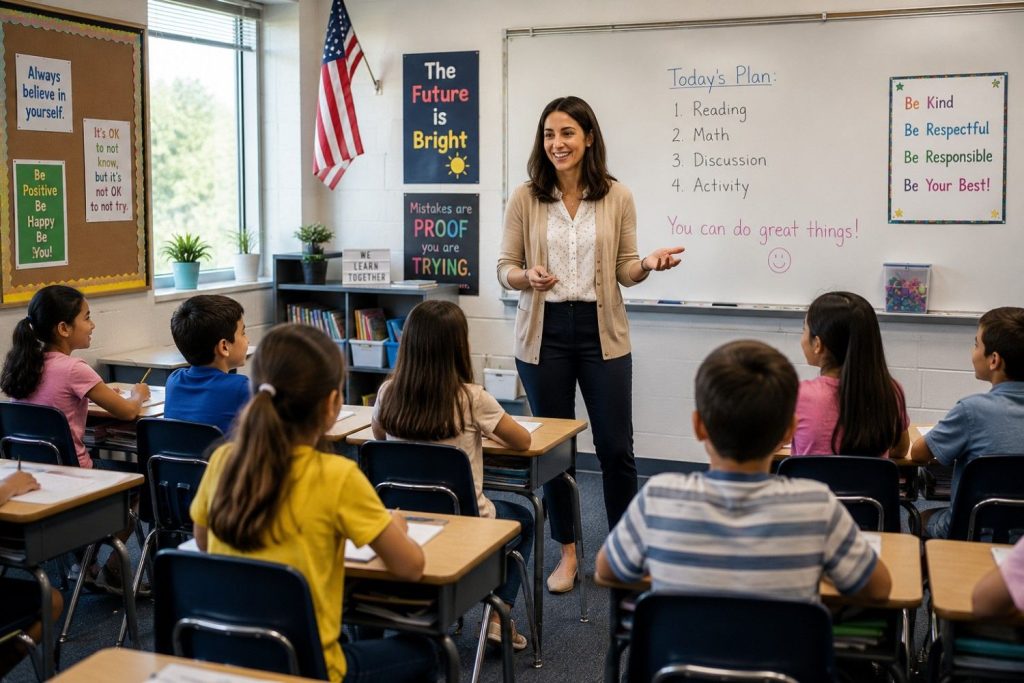
The following six-step approach will help teachers receive feedback professionally and turn criticism into meaningful improvement.
1. Stop Your First Reaction
The first few seconds after hearing criticism are often the most important.
When someone points out a problem with your teaching, your brain naturally activates a defensive response. You may want to explain yourself immediately, interrupt the other person, or justify every decision you made during the lesson.
Resist that urge.
Instead, pause.
Take a slow breath.
Maintain eye contact.
Allow the person to finish speaking without interruption.
This brief pause gives your emotions time to settle and prevents you from saying something you might later regret.
Remember that criticism is information—not an emergency.

Why this matters for teachers
Teaching involves hundreds of decisions every day. No lesson is perfect, and no classroom is completely predictable. A single observation cannot define your ability as an educator. When teachers react calmly, they demonstrate professionalism and emotional intelligence—qualities expected from educational leaders.
Example
Imagine your principal says,
“Your lesson objectives were clear, but several students became disengaged during independent practice.”
An emotional response might be:
“Those students never pay attention. It wasn’t my teaching.”
A professional response would be:
“Thank you for pointing that out. I’d like to understand what you observed.”
The second response opens the door to improvement instead of conflict.
2. Remember the Benefits of Constructive Feedback
- Constructive criticism exists to improve performance, not to discourage it.
- Every successful teacher has grown through observation, mentoring, coaching, and honest conversations.
- Feedback helps teachers identify habits they may not even realize they have.
- Perhaps instructions are unclear.
- Maybe classroom transitions take too long.
- Perhaps questioning techniques only engage high-achieving students.
- Without feedback, these issues may continue for years unnoticed.

Example
A mentor notices that most of your questions require only one-word answers. Instead of feeling criticized, you decide to incorporate more open-ended questions into future lessons. Within a few weeks, classroom discussions become richer, and students begin explaining their thinking more confidently. A small piece of feedback leads to significant classroom improvement.
3. Listen to Understand Instead of Defending Yourself
When someone gives feedback, listen carefully. Do not interrupt or think about what you will say next. Try to understand exactly what they mean. If something is not clear, politely ask for an example. This helps you know what to improve.
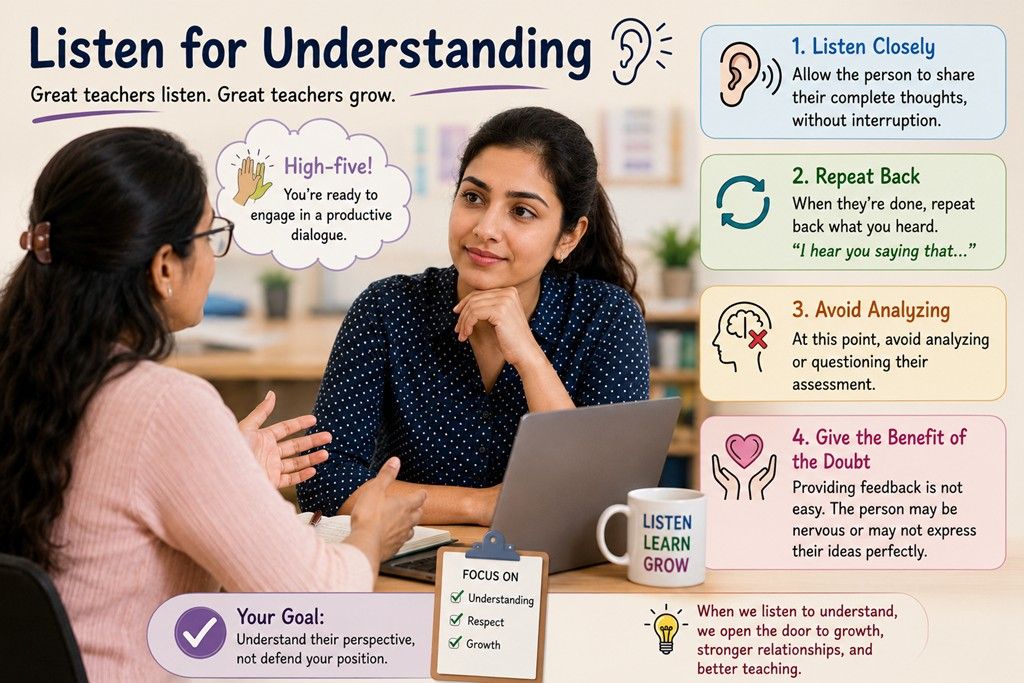
Example:
Your mentor says, “Your instructions were a little confusing.”
Instead of saying, “I explained everything!”, ask:
“Could you tell me which part was confusing for the students?”
Now you can learn exactly what needs to change.
4. Respond with Appreciation
Saying “thank you” after receiving criticism may feel difficult, especially if the feedback was unexpected. Nevertheless, it is one of the most professional responses a teacher can offer. A simple expression of appreciation acknowledges that someone invested time and effort in observing your work and providing suggestions.
Showing gratitude does not mean agreeing with every point. It simply demonstrates respect for the conversation and keeps communication positive. Educational environments thrive when teachers feel comfortable exchanging honest observations without fear of conflict or resentment.
For instance, after a classroom observation, you might say, “Thank you for your feedback. I appreciate you taking the time to explain your observations.” This response immediately creates a collaborative atmosphere and encourages further professional discussion.

5. Ask Questions That Lead to Improvement
Constructive criticism is most useful when it is specific. If the feedback seems too general, ask respectful follow-up questions that help you understand exactly what should change. The purpose is not to challenge the person giving feedback but to gather practical information you can apply in your classroom.
For example, if an evaluator comments that classroom management could be stronger, politely ask which situations concerned them the most. You might also ask what alternative strategies they would recommend or whether they have observed another teacher handling similar situations effectively.
These conversations often produce practical ideas that can be implemented immediately. Instead of leaving the meeting with vague concerns, you leave with a clear action plan for improvement.

6. Reflect Before Taking Action
You do not need to change everything immediately. Spend some time thinking about the feedback. Decide what changes will help your students the most.
After trying the new ideas, you can meet the person again and discuss your progress.
Read More:
- How to Respond to Negative Feedback as a Teacher Without Taking It Personally
- Teacher Self-Reflection: A Complete Guide to Improving Your Teaching Practice
- How Classroom Observation Helps Teachers Improve Student Learning
- Teacher Professional Growth: 12 Practical Strategies for Continuous Improvement
- How to Build Emotional Intelligence as a Teacher for Better Classroom Relationships
Alternative topics of Constructive Criticism
- Receiving Feedback at Work: A Teacher’s Professional Guide
- Growth Mindset for Teachers: Why It Matters in Every Classroom
- How to Handle Teacher Performance Reviews with Confidence
- Reflective Teaching Practices Every Teacher Should Use
- Teacher Communication Skills: How to Have Difficult Professional Conversations
Every great teacher receives feedback. The best teachers are not those who never make mistakes—they are the ones who learn from them. If you stay calm, listen carefully, ask questions, and keep improving, every piece of constructive criticism can help you become a more confident and successful teacher.